
Ace FCP_FSM_AN-7.2 Certification with 34 Actual Questions
PASS Fortinet FCP_FSM_AN-7.2 EXAM WITH UPDATED DUMPS
NEW QUESTION # 17
Refer to the exhibit.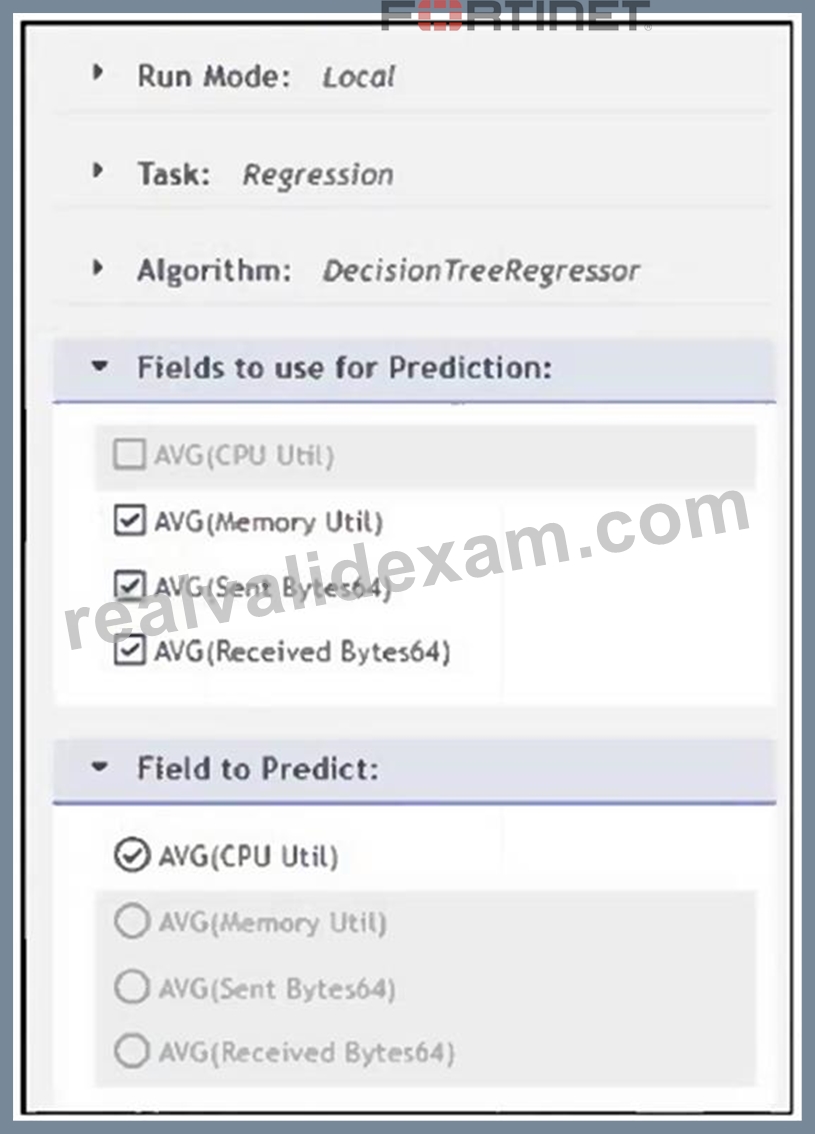
What will happen when a device being analyzed by the machine learning configuration shown in the exhibit has a consistently high memory utilization?
- A. FortiSIEM will trigger an incident for high memory utilization.
- B. FortiSIEM will update the regression tables for memory utilization, and average sent and received bytes.
- C. FortiSIEM will update the model with a higher memory utilization average value.
- D. FortiSIEM will lower the CPU utilization trigger requirement for CPU utilization.
Answer: C
Explanation:
In the configuration shown, FortiSIEM uses Memory Util, Sent Bytes, and Received Bytes as input features to predict CPU Utilization via a regression model. If a device shows consistently high memory utilization, the model will incorporate that into its training data and update itself with a higher average value for memory utilization, influencing future CPU utilization predictions.
NEW QUESTION # 18
When configuring anomaly detection machine learning, in which step must you select the fields to analyze?
- A. Prepare Data
- B. Design
- C. Schedule
- D. Train
Answer: A
Explanation:
In the Prepare Data step of configuring anomaly detection in FortiSIEM, you must select the fields to analyze. This step defines the input features that the machine learning model will evaluate during training and detection.
NEW QUESTION # 19
Refer to the exhibit.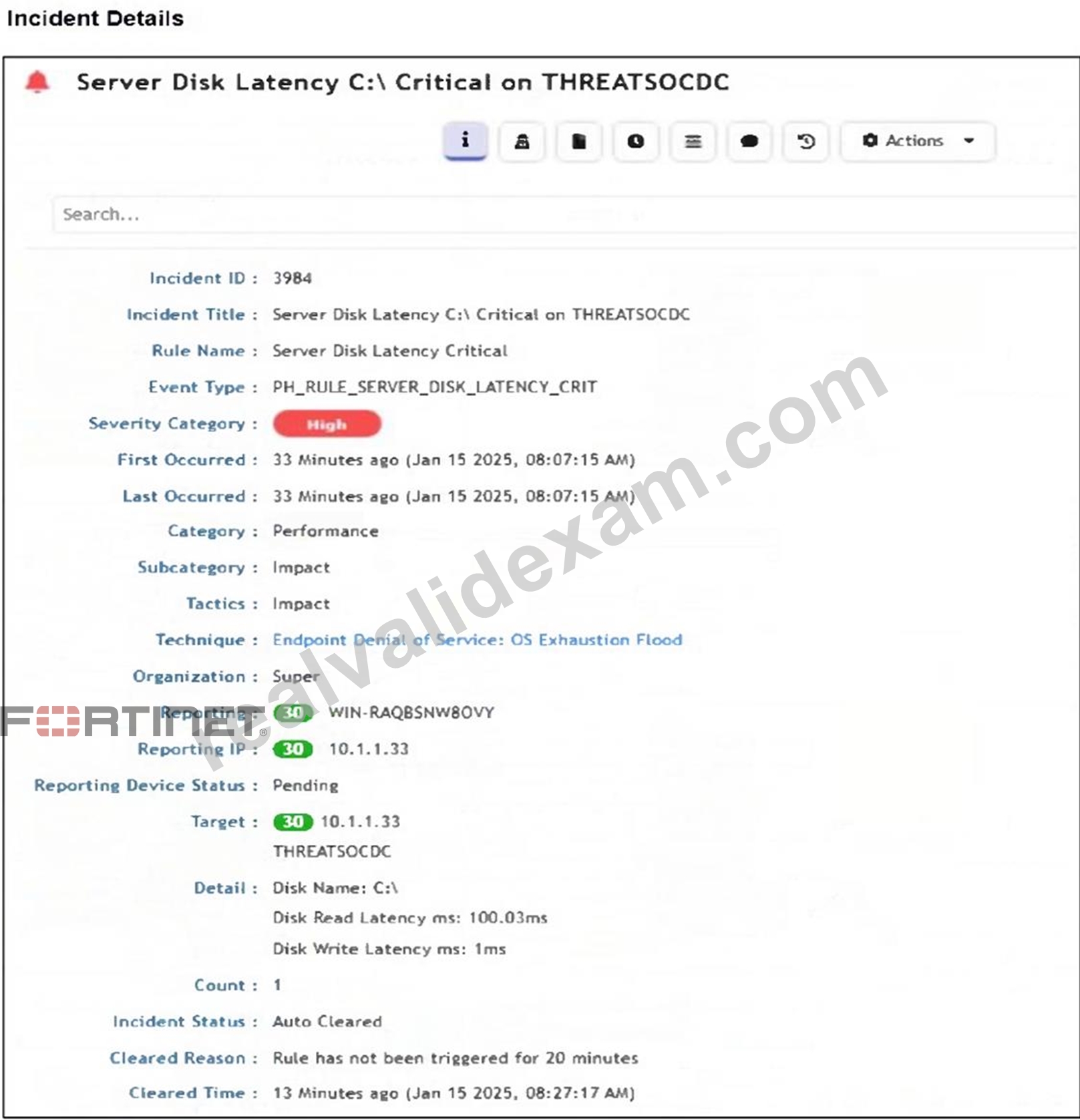
How was this incident cleared?
- A. The analyst manually cleared the incident from the incident table.
- B. The incident was cleared automatically by the rule.
- C. The endpoint was rebooted and sent an all-clear signal to FortiSIEM.
- D. FortiSIEM cleared the incident automatically after 24 hours.
Answer: B
Explanation:
The Incident Status shows "Auto Cleared", and the Cleared Reason states: "Rule has not been triggered for 20 minutes." This indicates that the incident was automatically cleared by the rule logic after a defined period of inactivity.
NEW QUESTION # 20
Refer to the exhibit.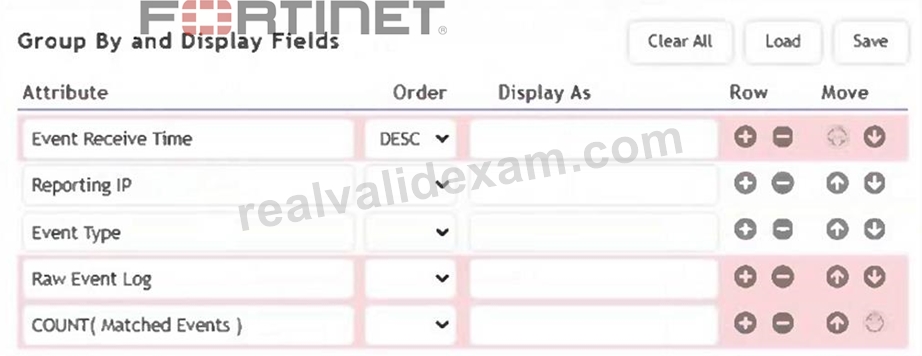
As shown in the exhibit, why are some of the fields highlighted in red?
- A. The Event Receive Time attribute is not available for logs.
- B. The attribute COUNT(Matched Events) is an invalid expression.
- C. No RAW Event Log attribute information is available.
- D. Unique values cannot be grouped B.
Answer: D
Explanation:
The fields are highlighted in red because unique values such as Event Receive Time and Raw Event Log cannot be used in group-by operations. Grouping requires aggregatable or consistent values across events, while these fields are unique to each event, making them incompatible for grouping.
NEW QUESTION # 21
What can you use to send data to FortiSIEM for user and entity behavior analytics (UEBA)?
- A. FortiSIEM agent
- B. SNMP
- C. SSH
- D. FortiSIEM worker
Answer: A
Explanation:
The FortiSIEM agent can be used to send detailed endpoint data such as user activity and process behavior to FortiSIEM, which is essential for performing User and Entity Behavior Analytics (UEBA).
NEW QUESTION # 22
Which items are used to define a subpattern?
- A. Filters, Group By, Threshold definitions
- B. Filters, Aggregate, Time Window definitions
- C. Filters, Aggregate, Group By definitions
- D. Filters, Threshold, Time Window definitions
Answer: C
Explanation:
A subpattern in FortiSIEM is defined using Filters to match specific events, Aggregate conditions to apply statistical thresholds (e.g., COUNT), and Group By attributes to segment data for evaluation. These three components collectively determine how the subpattern functions.
NEW QUESTION # 23
Refer to the exhibit.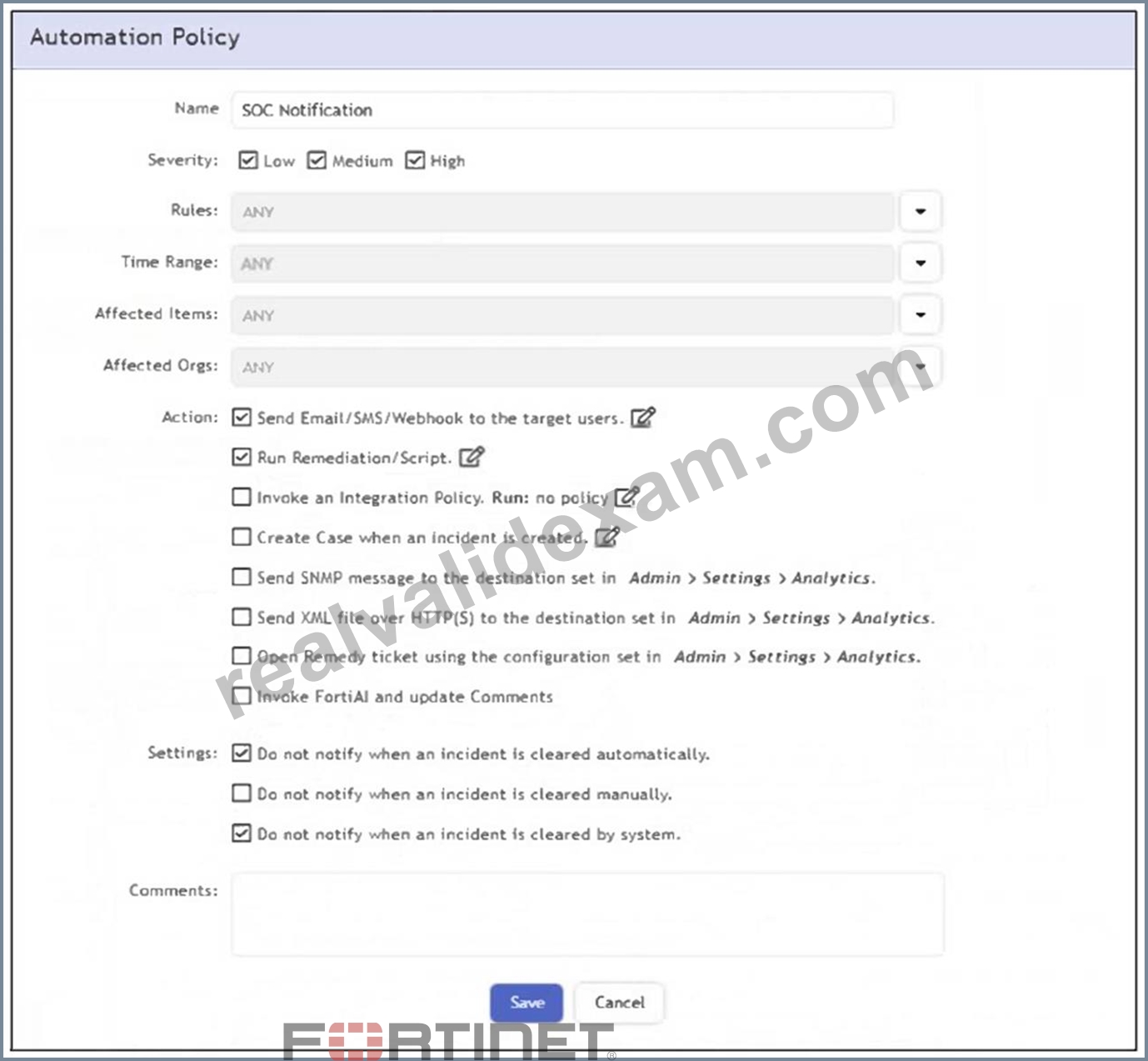
What happens when an analyst clears an incident generated by a rule containing the automation policy shown in the exhibit?
- A. An email is sent to the SOC manager.
- B. The remediation script is run.
- C. No notification is sent.
- D. A notification is sent to the SOC manager dashboard.
Answer: C
Explanation:
The automation policy has the option "Do not notify when an incident is cleared manually" enabled. Therefore, when an analyst manually clears an incident, no notification or automation action is triggered.
NEW QUESTION # 24
Which running mode takes the most time to perform machine learning tasks?
- A. Forecasting
- B. Local auto
- C. Regression
- D. Local
Answer: D
Explanation:
In Local mode, FortiSIEM performs machine learning tasks using the full dataset without optimization shortcuts, making it the most time-consuming mode compared to Local Auto, Forecasting, or Regression.
NEW QUESTION # 25
Refer to the exhibit.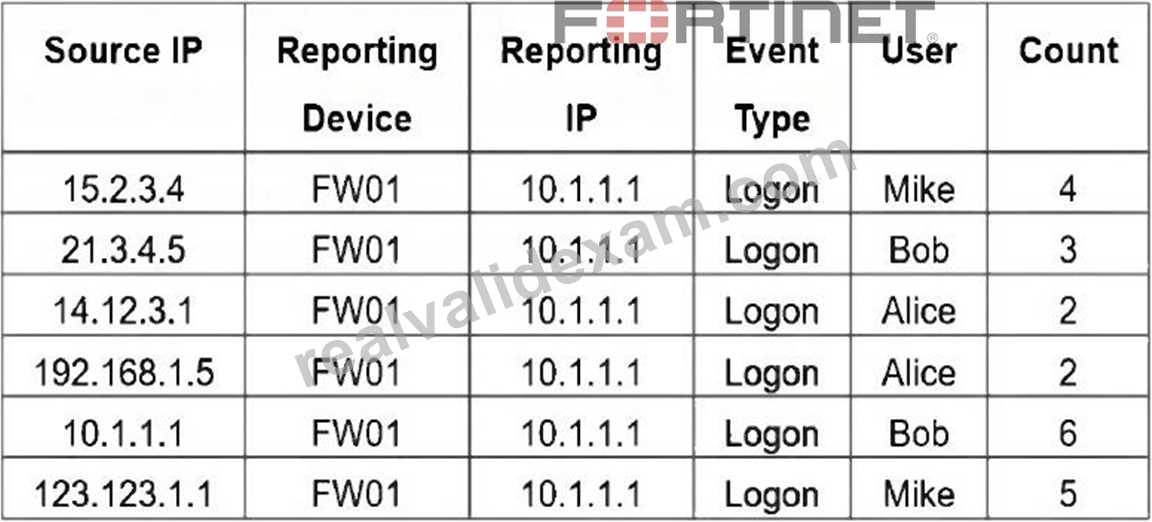
If you group the events by User, Source IP, and Count attributes, how many results will FortiSIEM display?
- A. Four
- B. Three
- C. Five
- D. Two
- E. Six
Answer: E
Explanation:
Grouping by User, Source IP, and Count means that each unique combination of those three attributes will be treated as a separate result. In the table, all six rows have distinct combinations of User, Source IP, and Count - so FortiSIEM will display 6 results.
NEW QUESTION # 26
Refer to the exhibit.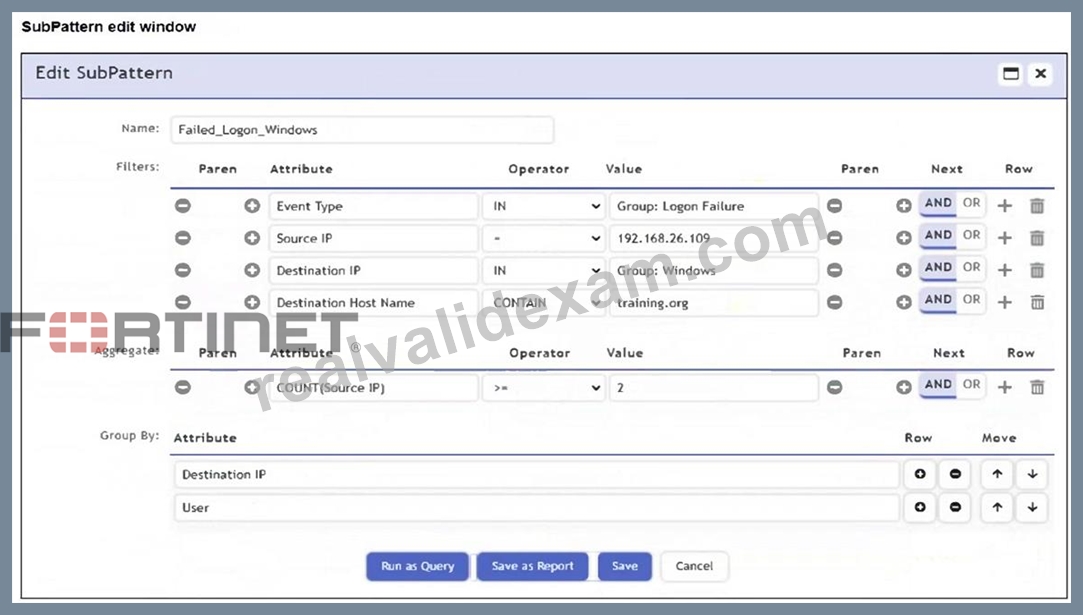
An analyst is troubleshooting the rule shown in the exhibit. It is not generating any incidents, but the filter parameters are generating events on the Analytics tab.
What is wrong with the rule conditions?
- A. The Aggregate attribute is too restrictive.
- B. The Group By attributes restricts which events are counted.
- C. The Event Type refers to a CMDB lookup and should be an Event lookup.
- D. The Destination Host Name value is not fully qualified.
Answer: B
Explanation:
The Group By attributes - Destination IP and User - cause the aggregation (COUNT(Source IP) >= 2) to apply within each unique combination of those groupings. This restricts the count calculation and can prevent the rule from triggering incidents, even if matching events exist in the Analytics tab.
NEW QUESTION # 27
How can you query the configuration management database (CMDB) in an analytics search?
- A. On the CMDB tab, select an entry, and then click Create Search.
- B. On the Admin tab, click CMDB Search.
- C. Click Value > Select from CMDB.
- D. Click Attribute > Select from CMDB.
Answer: C
Explanation:
In an analytics search, you can query the CMDB by clicking Value > Select from CMDB, which allows you to choose values directly from CMDB entries for the selected attribute, enabling precise filtering based on asset data.
NEW QUESTION # 28
Refer to the exhibit.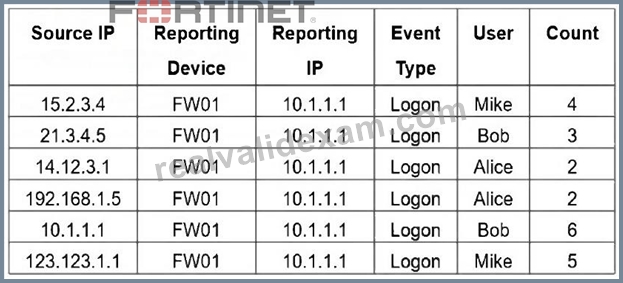
If you group the events by User and Count attributes, how many results will FortiSIEM display?
- A. Six
- B. Five
- C. One
- D. Three
- E. Two
Answer: B
Explanation:
Grouping by User and Count yields five unique pairs: (Mike,4), (Bob,3), (Alice,2), (Bob,6), (Mike,5).
NEW QUESTION # 29
What are two required components of a rule? (Choose two.)
- A. Detection Technology
- B. Clear policy
- C. Exception policy
- D. Subpattern
Answer: A,D
Explanation:
A Subpattern defines the specific conditions or event patterns the rule is designed to detect, and the Detection Technology specifies the type of detection logic (e.g., real-time, historical). Both are essential for a rule to function in FortiSIEM.
NEW QUESTION # 30
Refer to the exhibit.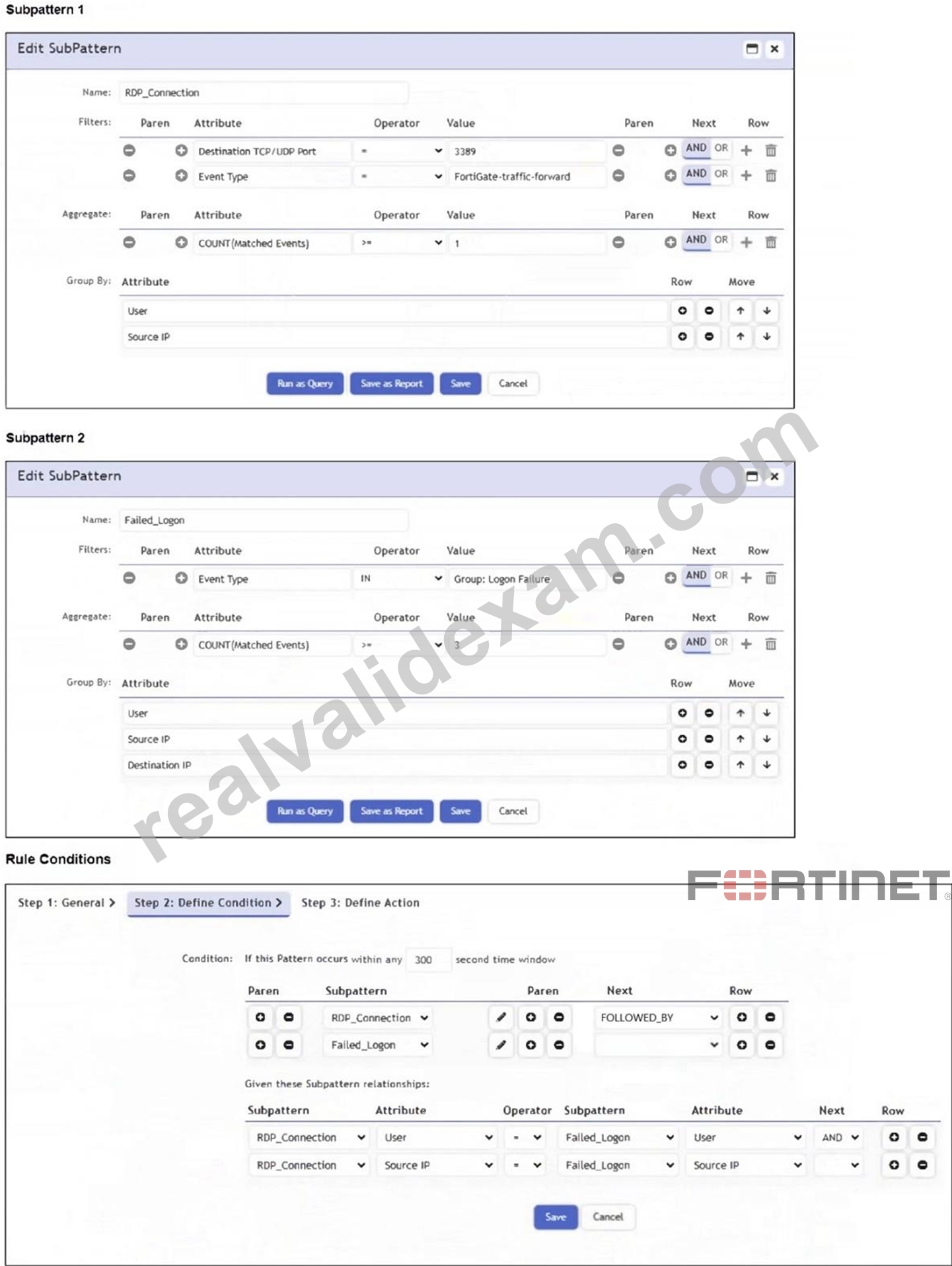
Which two conditions will match this rule and subpatterns? (Choose two.)
- A. A user connects to the wrong IP address for an RDP session five times.
- B. A user fails twice to log in when connecting through RDP.
- C. A user runs a brute force password cracker against an RDP server.
- D. A user using RDP over SSL VPN fails to log in to an application five times.
Answer: C,D
Explanation:
The user initiates an RDP session (Subpattern 1) and then fails to log in multiple times (Subpattern 2 with COUNT(Matched Events) >= 3) - both from the same Source IP and User within 300 seconds.
The brute force attempts typically involve a successful RDP connection followed by multiple failed logins, satisfying the sequence and grouping conditions in the rule.
NEW QUESTION # 31
......
Fortinet FCP_FSM_AN-7.2 Exam Syllabus Topics:
| Topic | Details |
|---|---|
| Topic 1 |
|
| Topic 2 |
|
| Topic 3 |
|
| Topic 4 |
|
FCP_FSM_AN-7.2 Questions PDF [2025] Use Valid New dump to Clear Exam: https://officialdumps.realvalidexam.com/FCP_FSM_AN-7.2-real-exam-dumps.html
